


Realization of the right to scientific creativity and its freedom (part 1)
https://doi.org/10.25587/2587-5612-2026-3-12-19
Abstract
This article (Part One) examines the theoretical and legal aspects of the implementation of the right to scientific creativity and its freedom. Part Two will address practical aspects and propose an algorithm for the realization of the right to scientific creativity, covering the grounds for its emergence, subjects, structure, rights and obligations, limits of exercise, and liability. In the context of the evolving legal regulation of science and scientific-technical policy, new issues concerning the implementation of the right to scientific creativity are arising, which require further specification. Given that each scientific result obtained as a product of creativity necessitates individualization, legal protection, dissemination, assimilation, etc., the holders of this right acquire a complex set of rights, obligations, and legitimate interests. These rights are particularly significant when determining liability and when it becomes necessary to identify the grounds for prosecution, as well as to establish clear benchmarks for the limits of exercising the right to scientific creativity, beyond which one may not proceed.
About the Author
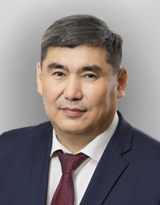
Z. I. Koryakina
M.K. Ammosov North-Eastern Federal University
Russian Federation
Russian Federation
Koryakina Zinaida Ivanovna - Candidate of Law, Associate Professor of the Department of of Criminal Law Disciplines
Yakutsk
References
1. Lenchuk EB. Role of the state in managing scientific and technological development: from theory to substitution. Intellect. Innov. Invest. 2025;(2):11-22.
2. Lapaeva VV. Freedom of scientific creativity as a factor ensuring Russia’s technological sovereignty. Sci. Manag. Theory Pract. 2023;5(4):14-26.
3. Shutova VN. Problems of legal regulation and implementation of freedom of creativity. Prologue: Law J. 2017;(2):3-6.
4. Romanovskaya OV. The constitutional right to freedom of scientific creativity: content, limitations, regulatory problems. Univ. Proc. Volga Reg. Soc. Sci. 2021;3(59):5-17.
5. Avdulov NS. Science and innovation. State Munic. Manag. Sci. Notes. 2008;(3):6-15.
6. Gumerov LA. Freedom of scientific and technical creativity in the human rights system. Sci. Notes Kazan Univ. Humanit. Sci. Ser. 2012;(4):16-24.
7. Sitdikova RI. Constitutional and legal guarantees for the protection of creativity. Sci. Notes Kazan Univ. Humanit. Sci. Ser. 2011;(4):113-122.
8. Koryakina ZI. Legal regulation of the participation of individual subjects in scientific and (or) scientific-technical activities (part one). Vestn. North-Eastern Fed. Univ. named after M.K. Ammosov. Ser.: Hist. Polit. Law. 2023;3(31):25-30.
9. Koryakina ZI. Legal regulation of the participation of individual subjects in scientific and (or) scientific-technical activities (part two). Vestn. North-Eastern Fed. Univ. named after M.K. Ammosov. Ser.: Hist. Polit. Law. 2024;4(36):41-47.
10. Khakimov IA. On the issue of the mechanism for ensuring the implementation of law. Vestn. SGLA. 2014;1(96):191-194.
11. Fliter YaS. Freedom of scientific creativity in the context of legislation on science and small technology companies: challenges and prospects. Law Pract. 2024;(2):83-89.
12. Sokolova TV. Constitutional foundations of legal regulation of the work of scientific workers. Law Manag. 2022;(8):169-173.
13. Usanov DO. The concept of the mechanism for implementing human and civil rights and freedoms: modern approaches to studying the problem. Universum: Econ. Law. 2016;12(33).
14. Maksimov GB. The essence of the mechanism of implementation of law. Law Pract. 2015;(1):10-15.
15. Kutko VV, Bodrukhin AP, Nesterenko VV. Forms of implementation of law and the mechanism of their implementation. Law State: Theory Pract. 2025;(6):94-96.
Review
For citations:
Koryakina Z.I. Realization of the right to scientific creativity and its freedom (part 1). Вестник Северо-Восточного федерального университета имени М. К. Аммосова. Vestnik of North-Eastern Federal University. Серия «Общественные науки. Social science». 2026;(3):12-19. (In Russ.) https://doi.org/10.25587/2587-5612-2026-3-12-19
Views:
46
JATS XML



 Email this article